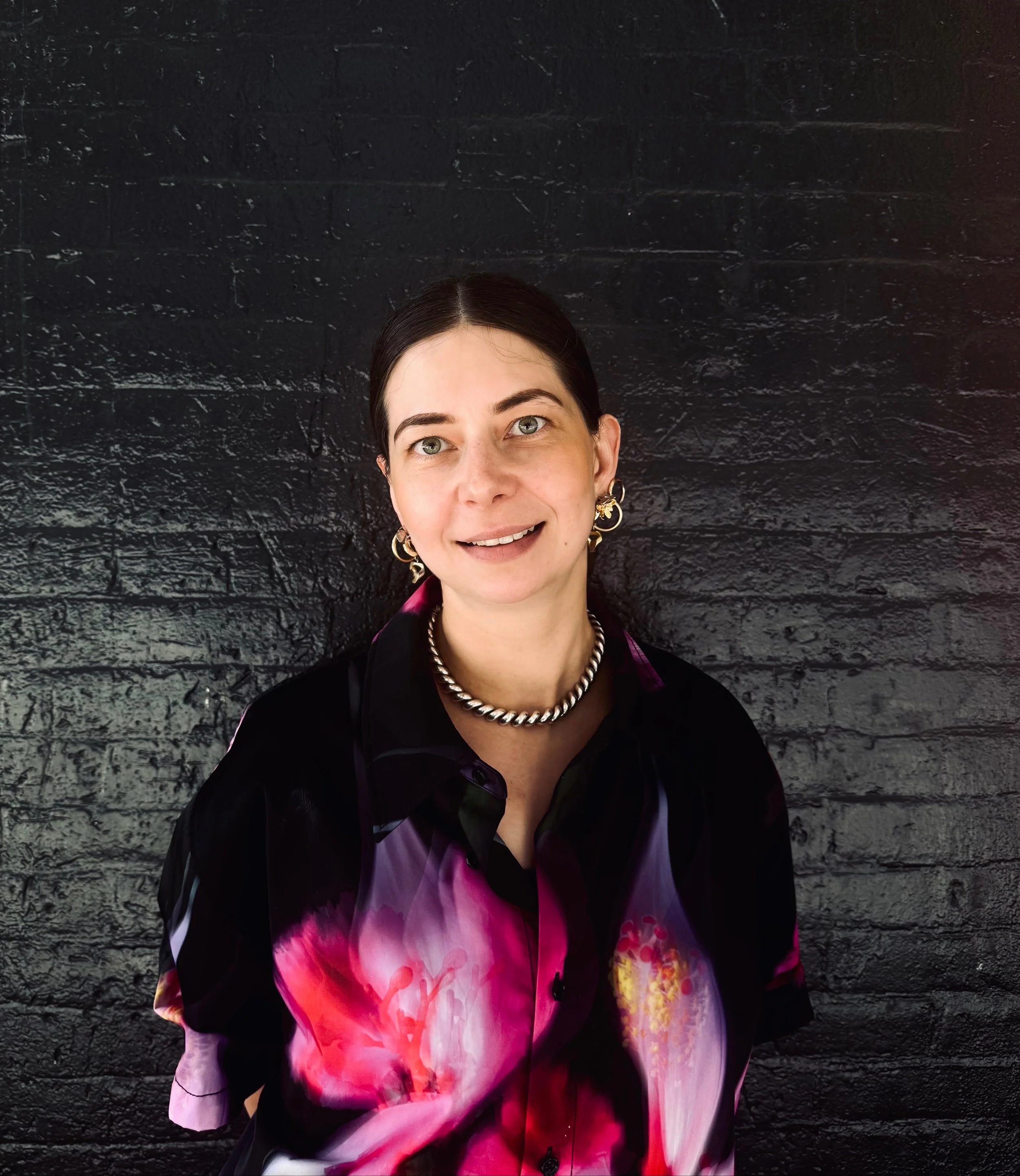
In Conversation with Vika Goldstein
Tell us about your background:
I am a textile specialist living and working in New York City. I went to art school in Amsterdam at Gerrit Rietveld Academy before moving to NYC. I pivoted from heading down a path of costume design for movies to fashion. There, I learned how to think like a creative director before even being taught how to make a simple lapel jacket pattern. That way of thinking benefited me greatly later in my career.
My first fashion job was at Telfar when it was still operating as a startup but already highly recognized in the New York downtown scene. I left Telfar just before they won a CFDA award and the city was flooded with their logo bags. I decided to move on because I realized I had reached a point where I wanted to learn from people with more structured experience in development, production, and merchandising. I wanted to understand the full picture and experience the complete cycle of creating a product. Having experienced the conceptual side of the industry, I pursued very corporate roles. I landed at Tommy Hilfiger and later Ralph Lauren.
Eventually, I got a fabric designer position at Thom Browne. That was a very special experience. The role itself was quite unique, especially in the United States. I do not think there is another brand here where you can learn so much about textiles and have such hands-on experience. The setup felt much closer to a European fashion house.
My job was to design fabrics from concept to execution: creating artworks for prints, tweeds, jacquards, checks, and stripes, sourcing base qualities, and bringing them to life. It was an incredibly immersive role. It involved a great deal of research, traveling to mills around the world, searching for the finest textiles, and finding the right partners to produce them in unique and innovative ways. It gave me a deep understanding of craftsmanship and textile development.
Over the years my priorities had shifted, and I decided it was time for a new chapter. My next step was Marc Jacobs, where I currently work today. It was a logical next step in my career: a reputable company with an iconic brand identity. I joined the fabric R&D team and have now been there for 4.5 years.
At Marc Jacobs, I have had to apply my creativity in a very different way. It is still a highly design-driven brand, but it occupies a different position in the market. Expectations are always high, and much of my role has involved balancing the design team’s vision with the realities of the customer and the business. I must say it has been both challenging and rewarding.
At the moment, I lead RTW fabric development for woven fabrics, denim, and washes, and I oversee fabric sourcing for bespoke press celebrity outfits. I am very proud of the work I have done and the partnerships I have built throughout my career. It has been a wild ride so far, and I am excited about the opportunities and challenges that lie ahead.
What do you wish you’d known when you started out?
Each of us has our own unique path and we should be proud of it. We need to embrace our strengths and take a holistic view of what we can do, how we can do it, and what we want to learn next.
My experience and path are very unique and special. I bring something to the table that not every textile specialist can offer. I was trained in Europe, where I learned how to think out of the box and developed my eye and my taste. I worked at reputable luxury brands as well as mid-level commercial brands. I have managed fabric developments with budgets ranging from hundreds of dollars to hundreds of thousands of dollars. I have done the work of both a graphic designer and a traditional fabric R&D specialist, and that has made me a more complete textile professional. My skills are unconventional, and that is my strength.
Best career advice you've ever received?
One of my managers told me to come to him when I stopped learning. His point was that no one should stay in one place for too long without opportunities to grow and develop. I have always followed that advice. For me, it has become a very clear sign that it is time to move on and seek the next challenge.
Another piece of advice I would like to share has stayed with me throughout my career is from my first internship in Amsterdam at a fashion branding company called CMK1. At that time, I really had to hustle. I was working on my graduation thesis, doing the internship, and assisting a stylist on photoshoots. I remember being constantly exhausted. One early morning I was working with the art director on a project for a shoe brand. We were sitting there and throwing ideas about how to rebrand it. That was the most exciting part of the internship. To this day, I find my passion in making things better, functioning better, operating better, and communicating better. Whether it’s product presentation, fabric performance, or cross-functional team communication, I thrive in environments where I see an opportunity to optimize something, bring greater success, tame the chaos, and turn it into productive creativity.
I remember the art director noticing the moments when my eyes would light up. He told me, “Always stay authentic. Different is good.” That advice has stayed with me ever since.
What leadership qualities are important to you?
I have worked with many types of leaders throughout my career. The best leaders made me feel supported, challenged, and empowered to grow. That is the kind of leader I aspire to be myself.
There were some who constantly asked me to do things that were completely outside my scope and expertise, and I would usually say yes if I saw a learning opportunity or a chance to gain visibility.
“Can you take pictures for our Shopify?” Yes! Why not?
“Can you Photoshop them?” Sure thing!
“Can you make a pattern, deliver a gift bag to a celebrity, and check on production at a Midtown factory on your way back?” Yeah, I can do that…
Others were the opposite, scared to delegate, but also quick to jump ahead and present my work as their own.
I deeply believe that a good leader wants the people on their team to grow. They want visibility for them, they want them to learn, and they want them to move forward in their careers.
I must admit that I have caught myself feeling threatened by talented junior colleagues or reports. Based on many conversations I have had on this topic, it seems surprisingly easy for people to fall into the toxic trap of believing that one person’s success means another person’s failure. That is completely false. When a leader gives someone on their team an opportunity to challenge themselves and shine, and that person succeeds, it reflects well on everyone involved. I think this is a broader issue we see in society as a whole.
I also think we are usually quick to point out mistakes. A good leader remembers to do the opposite as well. They remember to say, “Well done.” They remember to say, “I am so proud of you.”
What has been the biggest challenge in your career so far?
Being a working parent in NYC.
Have you ever seen a woman jogging in heels at 6pm on a weekday? That was me.
I have to be in constant conversation with myself about the boundaries I need to create at home and in the office. Almost six years into parenthood, I have realized that there is no everyday recipe for managing work-life balance. Sometimes I have to be able to pivot as the day progresses and adjust where and when I can.
It has also definitely made me more strategic about my career. I do like a good challenge, but I have had to turn down interesting opportunities because they would have brought more uncertainty into my life.
On the other hand, I have had to learn how to be more firm and direct with my employers, communicating what I, as both a worker and a mother, need and what I can or cannot put up with.
Parenthood has taught me a great deal about prioritization, adaptability, and boundaries. Those lessons have made me stronger not only at home, but also in my professional life.
How do you define success in your career, and how has that definition evolved over time?
Success can take many forms, and I believe it naturally evolves over time.
Early in my career, recognition and visibility, meaning that people actually knew who I was, were very important to me. I wanted to go to the best fashion school. I wanted to work for the most artistically recognized brands, and it didn’t matter how much I had to give up to get there.
I was doing unpaid internships from Monday through Friday, putting in 50–60-hour weeks, and then working retail jobs. Even my retail job, which I knew wasn’t something I would build my career on, still had to be at one of the most creative and well curated stores in SoHo.
I benefited greatly from that retail job at Henrik Vibskov. I met high-profile clients, some of whom became friends, and I built connections that opened doors to the part of the industry I wanted to be in. I met Telfar who I worked for later on. I also learned about product presentation and customer experience, knowledge that still helps me today. The first thing people see when they come to a clothing rack is the fabric. They decide whether they want to look closer based on the color, texture, or pattern. It’s something so fundamental, yet often overlooked by many brands and designers.
At the time, working seven days a week, mostly for free, didn’t feel very glamorous. I often doubted whether I was doing the right thing or if I was even on the right path. Now, I realize how important and impactful every single experience was. If we are willing to learn from it, every experience can help us move closer to our goals.
I was also a little older than many people just starting in fashion because I had switched from the movie industry and gone back to college. On one hand, people my age already had established careers, and I felt like an outsider among them. On the other hand, the people I was starting my fashion career with were younger than me, and I didn’t quite feel like I belonged there either. Luckily, I didn’t focus on that too much. Instead, I met fantastic people, built meaningful relationships, and made friendships that have stayed with me.
When I think about success now, I no longer chase big brand names or buzz. I still value recognition, but it’s a different kind of recognition. I want people I work with to say, “Vika, you’re killing it.” I want to see the sales report and know that everything I worked on sold through instead of ending up on markdown.
Before, success meant sitting in the front row. Today, I am perfectly comfortable being behind the scenes on the product development side. I have found countless ways to be creative while building relationships with vendors, negotiating, strategizing, and delivering a quality product. I feel successful when I can help a designer realize the product they dreamed of while also delivering the margins my merchandising team was targeting.
How has networking contributed to your professional growth and success?
Networking, to me, isn’t about asking people for favors. It’s about building genuine relationships over time so that when an opportunity appears, people already know who you are, what you stand for, and what you can bring to the table.
I believe that putting myself out there is incredibly important. Talent is important. Hard work is important. But people knowing about my talent and my skills are just as important. I want to be on their radar. I want them to think of me when the right opportunity comes along. As well as they feel comfortable coming to me asking for a recommendation.
At the age of 21, I landed a job with a costume designer who had worked on films that every film school around the world studies as part of its curriculum on the greatest works of cinematography. I was talented, but it also happened that my English tutor was the costume designer’s grandchild, and he introduced us when her previous assistant left.
There have been times when connections I made years earlier have helped me. There have also been times when someone personally hand-delivered my résumé and recommendations to the hiring manager, who was based in another country, for a job here in New York, and I still didn’t even receive a “we have made a difficult decision to move forward in a different direction” email.
Those experiences taught me that not every door is meant to open, at least not at that moment. Sometimes there are reasons we simply don’t know when we keep knocking on a particular door.
What are your top networking tips for building strong connections in your industry?
This is my second time joining Co-lab. The last time I joined was about a year ago. Somehow, I thought it would be the place where the perfect new job would just land in my lap. It did not happen.
I remember talking to Kristy about it and her helping me with a strategy. I also had to hear the same advice from many other people, including my husband, who is a documentary editor and director. He gets all of his jobs through networking. He kept telling me, “Keep checking in with old colleagues, keep meeting new people, and keep expanding your network.”
One day, it finally clicked. This might be obvious to some people, but it wasn’t to me for a long time. Networking isn’t about reaching out to people you haven’t spoken to since 2015 only when you need something. It’s about consistently nurturing those connections and relationships, being genuinely curious about what people are up to, and thinking about how you can contribute rather than what you can ask for.
That shift completely changed the way I see networking. Something that used to feel fake and uncomfortable now feels fun and joyful. Instead of seeing it as a task, I see it as an opportunity to build real relationships, learn from others, and stay connected to an industry that I genuinely love.
LinkedIn: https://www.linkedin.com/in/vika-goldstein-9854b5124
Instagram: @viktoriyagoldstein
