
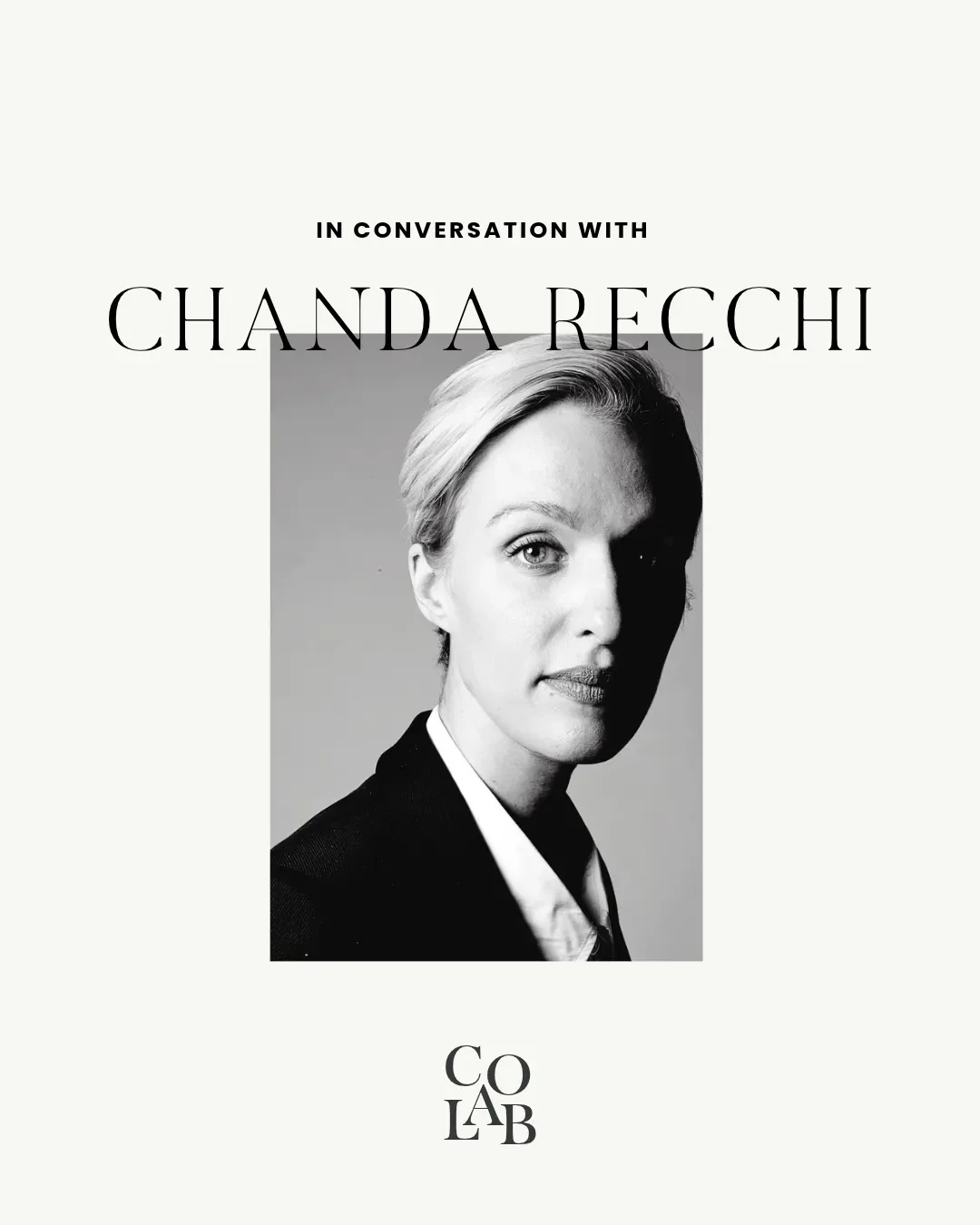
Tell us about your background:
I've spent more than 20 years working inside creative businesses, largely in fashion and luxury, exploring the complicated and fascinating relationship between creative vision, people, culture and commercial reality.
My career has taken me from New York to London, Stockholm, Milan and Paris, working with some of the most influential brands. I've worked closely with creative directors, CEOs and their teams, often at moments of significant transformation. Whether building creative organisations, evolving brand identities, developing products and experiences, and finding ways to bring innovative ideas into the world.
What has always fascinated me is not simply what we create, but the conditions that make creation possible. The people, relationships, environments, decisions and sometimes invisible dynamics that determine whether an idea will flourish or fall apart.
Along the way, I've become equally interested in what happens to us as individuals within the systems we build. We spend so much of our lives, in particular as executives, learning how to perform, achieve, lead and meet expectations. Somewhere in that process, we often lose touch with our own instincts, desires and who we are underneath the social expectations.
These questions have accompanied me for much longer than my professional career, and they became the foundation of my independent practice, House of LÜN.
House of LÜN, an independent cultural and creative house exploring how we live, relate and create, and the conditions and experiences that shape what becomes possible.
The House brings together three interconnected expressions.
The Studio by LÜN is my creative and strategic practice, working with founders, CEOs, creative leaders and organisations through counsel, projects and commissions. Drawing on my experience inside creative businesses, I help people examine the challenges behind their ambitions, whether that means shaping an original vision, translating creativity into commercial reality, reconsidering the customer experience or changing how people work together.
The Private Practice is a more intimate, experiential form of inquiry, primarily for women navigating questions of identity, transition, desire and the relationship they have with themselves. Through conversation, reflection, intuitive exploration, ritual and sensory experiences, we explore what might become possible beyond the roles and expectations that have defined us.
The Cultural House is where LÜN's independent creative work takes form through gatherings, encounters, objects, publishing, cultural collaborations and experiences. It is a space for curiosity, experimentation and the unexpected, where ideas become something we can actually feel, experience and participate in.
Connecting all three is a developing philosophy that I call Perceptual Ecology: an exploration of how the conditions surrounding us shape our perceptions, choices and experiences.
I live between Paris and Umbria, where our home, Casa Mentuccia, has become a place for gathering, experimentation and creative exploration.
Ultimately, I am interested in bringing more humanity, imagination, pleasure and agency into how we live and work. And in creating the conditions for people to discover possibilities outside of what the world prescribes for them.
What do you wish you’d known when you started out?
That being good at something doesn't necessarily mean it's what you're meant to spend your life doing.
I've been fortunate to have a career filled with extraordinary people, opportunities and experiences. But I also spent many years measuring my value through what I could achieve, what I could solve and how useful I could be to others.
I wish I'd understood earlier that curiosity is just as valuable as certainty, that changing your mind isn't a failure of conviction, and that sometimes the most important thing you can do is question the very definition of success you've been working towards and take control of your own destiny.
Best career advice you've ever received?
One idea that has stayed with me is that you don't have to alway be the loudest or the most talented person in the room! Knowing how to make space for and recognise other's talents, bring people together and create the conditions for them to do their best work is what make a leader great.
I've carried that throughout my career. Leadership isn't about having all the answers or being responsible for every idea. It's about recognising what people can bring, often before they see it themselves, and creating something together that none of you could have accomplished alone.
What leadership qualities are important to you?
Curiosity, courage, generosity and the ability to hold complexity without immediately trying to control it.
I value leaders who have a strong point of view but are willing to question their assumptions. People who can make difficult decisions without losing their humanity, recognise the intelligence of others and understand that the conditions they create are just as important as the results they expect.
I also think humour, humility and a little irreverence are underrated leadership qualities. We can take our responsibilities seriously without taking ourselves quite so seriously.
What has been the biggest challenge in your career so far?
Learning to distinguish between responsibility and control.
I've spent much of my career in positions where I was expected to make ambitious creative visions possible, often navigating the competing needs of creative leaders, commercial organisations and the people responsible for bringing everything to life.
I've learned that you can take responsibility for an outcome without having control over all the conditions that influence it. And sometimes, no amount of personal effort can compensate for an environment that isn't designed to support what it's trying to achieve.
More recently, stepping away from the structures of established organisations to build something of my own has presented a different challenge: learning to trust my own definition of value, rather than relying on the role or institution around me to provide it.
How do you define success in your career, and how has that definition evolved over time?
Earlier in my career, success was closely tied to a constant upward trajectory. The next great opportunity, the title, the scale of what I helped create and fact that people saw my career as a success.
Those things still matter to me, and I'm proud of the work I've done. But my understanding of success has become much more personal.
Today, success is having the freedom to create work I believe in, with people I respect, in ways that feel aligned with how I want to live. It's about meaningful relationships, creative independence, financial freedom, curiosity and having enough space in my life to actually experience it.
I'm less interested in accumulating achievements and more interested in what those achievements make possible. I want to have an impact, not just an impressive CV.
How has networking contributed to your professional growth and success?
Almost every meaningful chapter of my career has been shaped by relationships.
The fashion and creative industries are remarkably interconnected, and I've been fortunate to work across different countries, cultures and disciplines. Many of the people I met early in my career have become friends, collaborators, mentors or people I've found myself working with again many years later.
But I've never thought of networking as collecting contacts. For me, it's an authentic connection and an ongoing exchange of ideas, generosity, curiosity and trust. In fact I am a terrible networker, in the traditional sense!
Some of the most interesting opportunities have emerged from conversations that had no immediate professional objective. I think relationships become particularly powerful when you allow them to evolve from genuine interest. This of course goes a bit against what everyone keeps telling me now that I am building my own business. But, I am who I am!
What are your top networking tips for building strong connections in your industry?
Be genuinely interested in people, not just what they do. Someone said something to me once, like try to love anyone for at least 1 minute, I mean really love them. This takes presence.
Stay curious! Especially about people whose worlds are different from your own. Some of my most valuable relationships have come from conversations outside my immediate discipline.
Be generous with your knowledge and connections without keeping score. Make introductions when you see a meaningful possibility between people.
Finally, don't underestimate the value of sharing a meal, taking a walk or having a real conversation. Some things simply don't happen through an email or LinkedIn message. This is why I love to travel, see people in their natural habitat!
LinkedIn: https://www.linkedin.com/in/chandra-crystal-recchi-bb06aa43
Website: www.houseoflun.com
Instagram: @houseoflunofficial
